Creating a page on Wikipedia is not as simple as writing content and clicking publish. In fact, most new submissions are rejected—often within minutes.
Many people use AI tools such as ChatGPT and other platforms to generate content and then attempt to publish it on Wikipedia exactly as it is. As a result, even articles that may have had the potential to remain on Wikipedia are often deleted because they fail to comply with Wikipedia’s policies and guidelines.
People often assume that because ChatGPT can produce text in a style similar to Wikipedia articles, the content is suitable for publication on Wikipedia. In reality, AI-generated content should never be used on Wikipedia without thorough human review, verification, and adherence to Wikipedia’s standards.
I have been editing Wikipedia for more than a decade, and even today I do not consider myself fully proficient in all of Wikipedia’s guidelines. Wikipedia is constantly evolving, and I continue to learn something new almost every day.
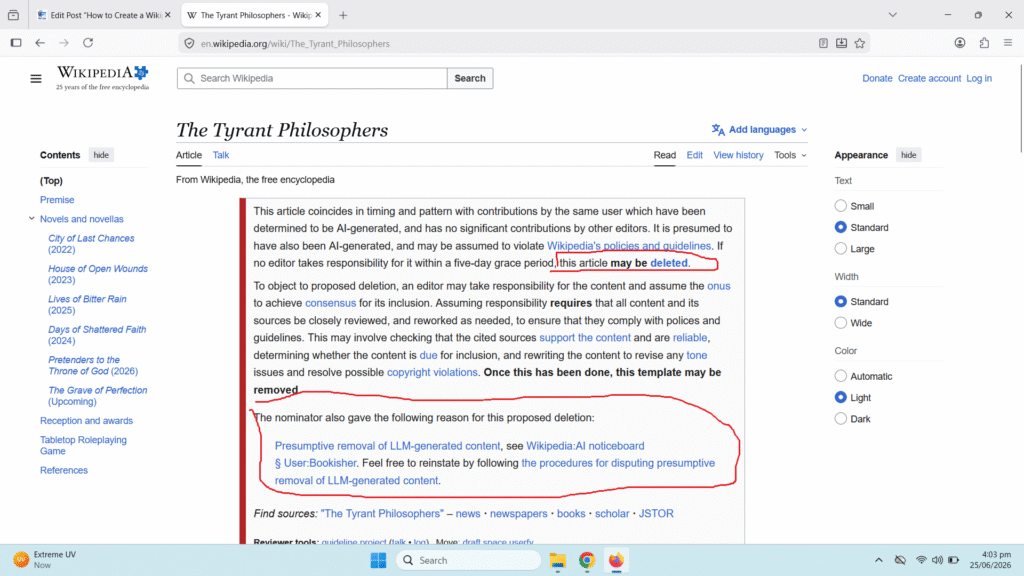
Using LLM is against the Wikipedia policy. This is what Wikipedia says about AI generated content: ‘The use of large language models (LLMs) and artificial intelligence (AI) to rewrite or generate article content is largely prohibited on Wikipedia because such edits often violate several of Wikipedia’s core content policies.”
Here is what a page faces when LLM is used for content writing. In most of the cases the page faces deletion. Have a look at the below page as an evidence.
This guide explains how the process really works, what reviewers look for, and how to avoid the most common mistakes.
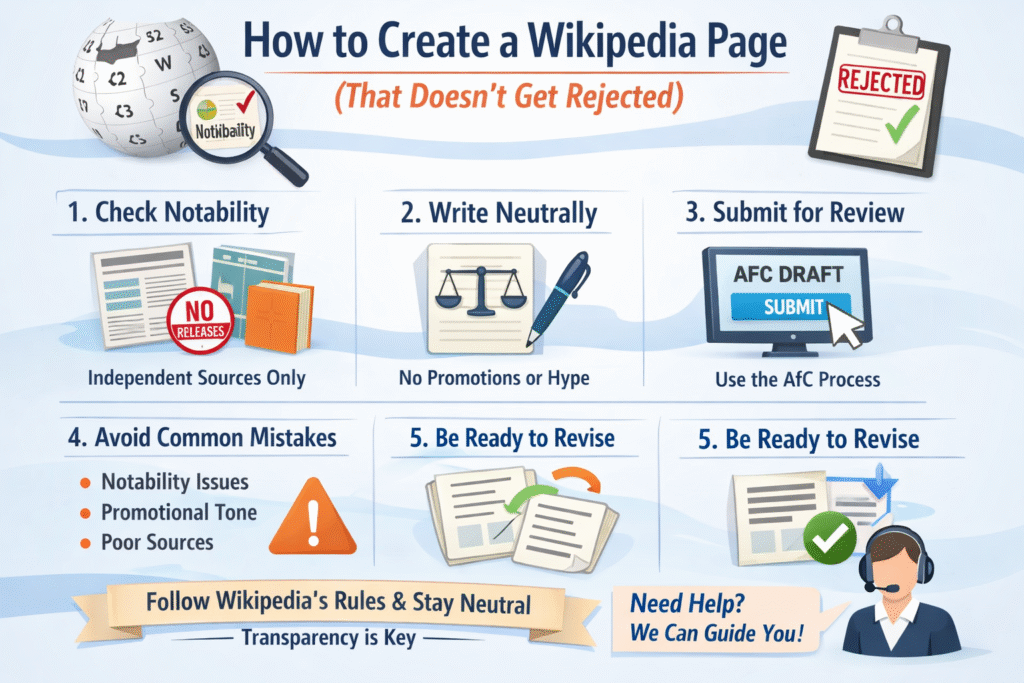
Step 1: Check Notability (This Is Where Most People Fail)
Before writing anything, you must determine whether your subject qualifies.
Wikipedia requires significant coverage in independent, reliable sources, such as:
- Major news publications
- Established magazines
- Books from reputable publishers
❌ Not acceptable:
- Press releases
- Your own website
- Sponsored or paid articles
👉 Insight:
Many submissions fail because they rely on self-published content rather than true third-party coverage.
Do you want to check yourself if there are enough reliable links or not? Mostly people say we have a lot of references and share an Excel sheet with hundreds of links gathered, but when I check if there is any as per the Wikipedia way of checking it turns to be zero or a mostly 3 or 4 links.
Today, I’ll tell you how to check exactly if there are links as per Wikipedia checking style. Open this link. Click on any link of Google, Books News etc and open in a new tab.
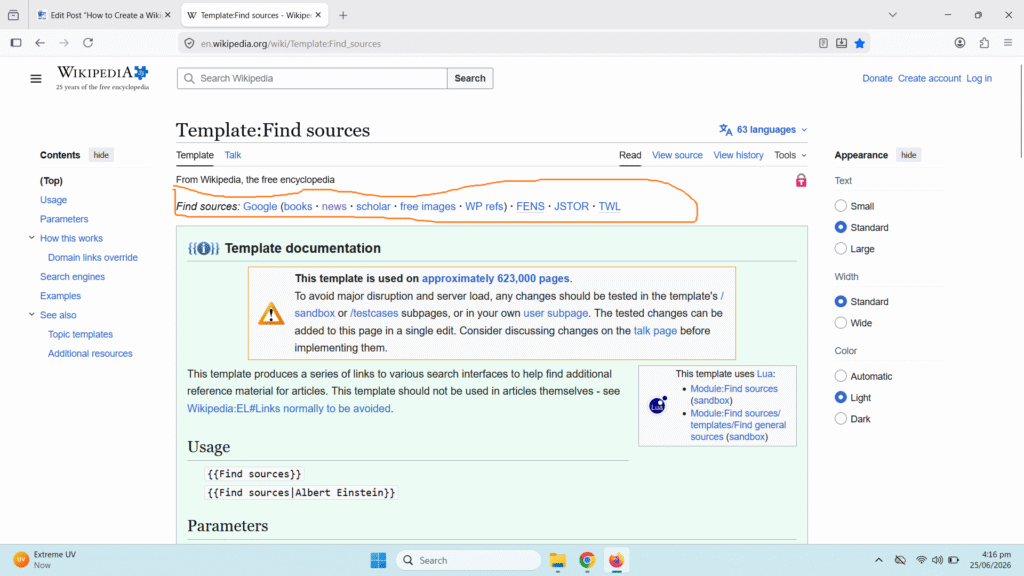
Like once you open the News link in a new tab, write the name of your subject in place of “Find Sources” and click enter, this will show the exact number of links available on reliable media about your subject.
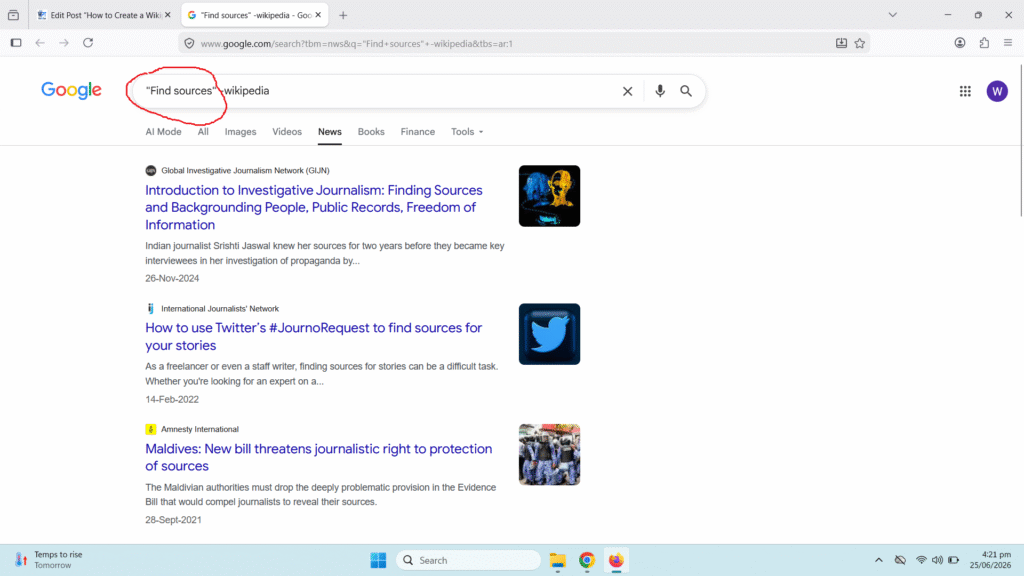
When you put the name over there it would give you the exact number of links available to be used or considered reliable by Wikipedia. But you should keep this in mind that, the more number of links you have this way of checking, the more it will be easier for you to pass the Wikipedia Notability Guidelines. But having a lot of links this way is not a surety you’ll be able to have a page.
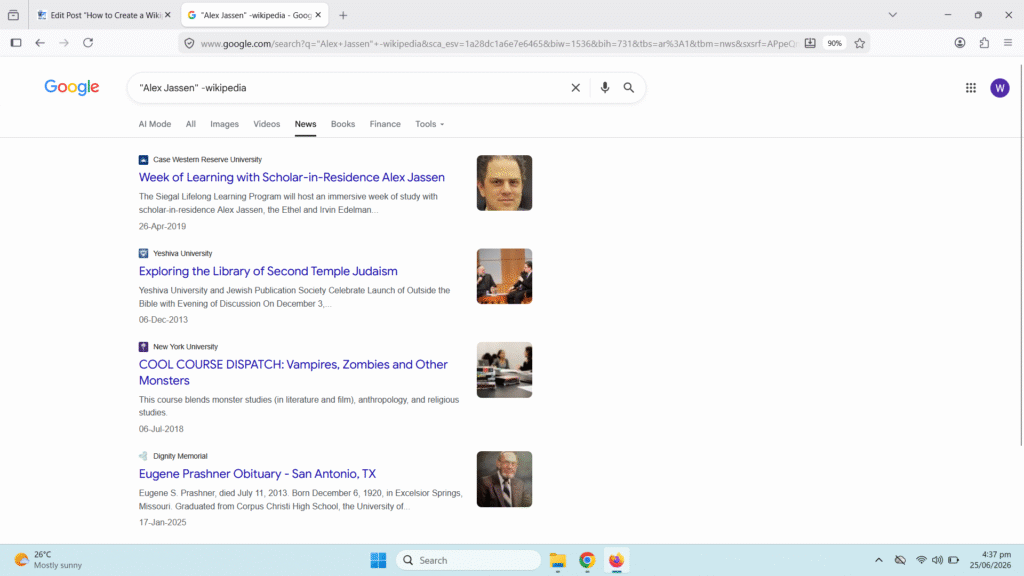
For example: if you have around 30 number of pages this way, but all are from the PR Newswire or EIN Presswire or any other press release website, you’ll still not pass other guidelines, though Notability Guidelines may be passed.
This is because Wikipedia not only counts number of pages in News Tab, it also judges where things are published and how things are covered.
Step 2: Create a Neutral Draft
Wikipedia is not a platform for promotion. Content must follow a neutral point of view.
Avoid:
- Marketing language (“leading”, “best”, “innovative”)
- Claims without citations
Instead:
- Stick to verifiable facts
- Attribute statements to sources
Step 3: Use the Articles for Creation (AfC) Process
New pages should be submitted through the draft system rather than published directly.
This means:
- Create a draft
- Submit it for review
- Wait for approval from independent editors
👉 What many don’t realize:
Even well-written drafts can be declined if sourcing is weak or tone is promotional.
Step 4: Understand Common Rejection Reasons
Based on industry experience, the most frequent issues include:
1. Lack of notability
Not enough independent coverage.
2. Promotional tone
Reads like an advertisement.
3. Poor sourcing
References are unreliable or not properly formatted.
4. Conflict of interest concerns
Content appears to be written by someone closely connected to the subject.
Step 5: Be Prepared for Revisions
Approval is rarely instant. Many drafts go through:
- Multiple reviews
- Declines with feedback
- Re-submissions
👉 Example scenario (anonymized):
A technology startup with several media mentions was initially rejected because most sources were interviews and press releases. After replacing them with independent coverage and rewriting the tone, the draft was approved on the second submission.
Important: Follow Wikipedia’s Rules on Paid Contributions
If you are working on behalf of a company or client, you must follow disclosure guidelines set by Wikipedia.
Transparency and neutrality are essential to avoid removal or account restrictions.
Final Thoughts
Creating a successful Wikipedia page requires:
- Strong independent sources
- Neutral, well-structured writing
- Patience with the review process
Most importantly, it requires understanding that Wikipedia is an encyclopedia—not a marketing platform.
How to Create a Wikipedia Page (That Doesn’t Get Rejected)
WikiProTeam with more than a decade of experience can create a page on any subject.
Do you want to check if you can have a Wikipedia page?
Click on this link and check if you qualify for Wikipedia.